




Why Health Risks Increase During Monsoon
The rainy season provides the perfect environment for germs, viruses, and mosquitoes to multiply. During this period, people are more susceptible to infections caused by contaminated food, unsafe drinking water, and mosquito bites.
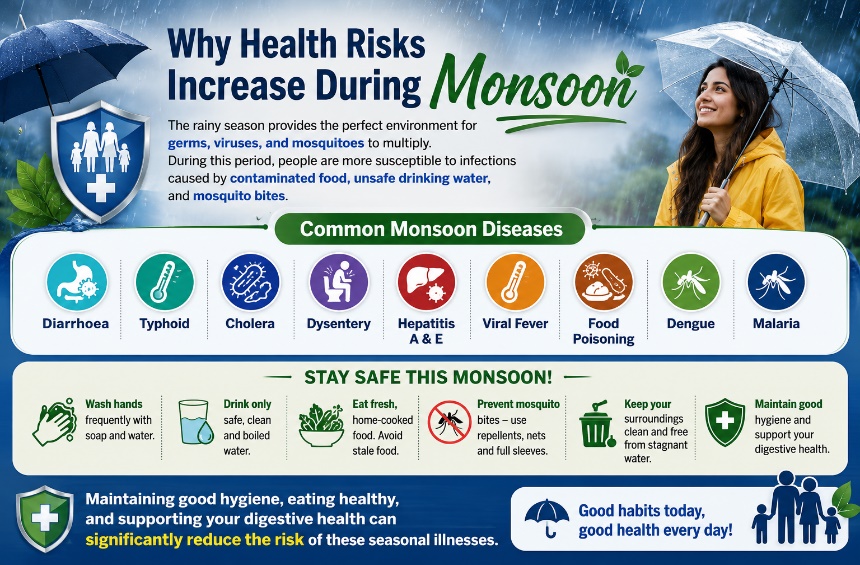
Common Monsoon Diseases
- Diarrhoea
- Typhoid
- Cholera
- Dysentery
- Hepatitis A & E
- Viral Fever
- Food Poisoning
- Dengue
- Malaria
Maintaining good hygiene, eating healthy, and supporting your digestive health can significantly reduce the risk of these seasonal illnesses.

2.Eat Fresh & Hygienic Food
Warm and humid weather causes food to spoil quickly.
Choose:
- Freshly cooked meals
- Hot foods
- Seasonal fruits that can be peeled
- Fresh vegetables cooked properly
Avoid:
- Street food
- Stale or reheated food
- Cut fruits sold outdoors
- Raw salads from unhygienic places

3.Wash Hands Regularly
Good hand hygiene helps prevent the spread of infections.
Wash your hands:
- Before eating
- After using the restroom
- After returning home
- Before preparing food
- After touching public surfaces
Use soap and water or an alcohol-based hand sanitizer.
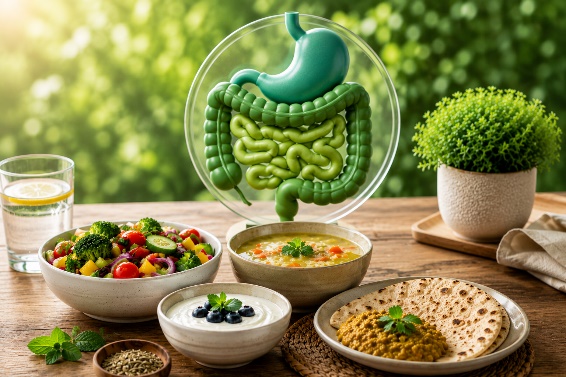
3.Take Care of Your Digestive Health
Monsoon often brings digestive issues due to contaminated food and irregular eating habits.
Common digestive problems include:
- Gas
- Bloating
- Indigestion
- Stomach discomfort
- Loss of appetite
If digestive discomfort occurs, consult your healthcare professional.
Also Read : Your Daily Partner for Better Digestion and Gut Comfort
4.Stay Well Hydrated
Even during cooler weather, your body requires adequate fluids.
Drink:
- 2–3 litres of water daily
- Fresh soups
- Coconut water
- Lemon water
Limit sugary soft drinks and excessive caffeinated beverages.

5.Strengthen Your Immunity
A healthy immune system helps your body fight seasonal infections.
Include foods rich in:
- Vitamin C
- Zinc
- Fresh fruits
- Green leafy vegetables
- Protein-rich foods
- Nuts and seeds
Also ensure adequate sleep and regular physical activity.

5.Protect Yourself from Mosquitoe
Monsoon increases mosquito breeding, leading to diseases such as dengue and malaria. Prevent mosquito bites by:
- Removing stagnant water around your home
- Using mosquito repellents
- Wearing full-sleeved clothing
- Installing window screens
- Keeping water storage containers covered

6.Maintain Clean Surroundings
Clean surroundings help reduce the spread of infections.
- Dispose of waste properly.
- Keep kitchens and bathrooms clean.
- Store food in covered containers.
- Ensure proper drainage around your home.

7.Stay Physically Active
Regular exercise helps improve digestion, circulation, and immunity.
Try:
- Walking
- Yoga
- Stretching
- Indoor workouts
Aim for at least 30 minutes of physical activity most days of the week.
Also Read – Monsoon Wellness: Simple Habits to Boost Your Child’s Immunity
8.Don’t Ignore Early Symptoms
Seek medical advice if you experience:
- Persistent diarrhoea
- High fever
- Severe abdominal pain
- Vomiting
- Blood in stools
- Signs of dehydration
- Symptoms lasting more than two days
Early diagnosis and treatment can help prevent serious complications.
Healthy Habits for a Healthy Monsoon
 Drink clean and safe water
Eat freshly cooked, hygienic food
Wash your hands regularly
Support healthy digestion
Stay well hydrated
Boost your immunity
Protect yourself from mosquitoes
Keep your surroundings clean
Exercise regularly
Consult your healthcare professional if symptoms persist
Final Thoughts
The rainy season doesn’t have to bring illness. By maintaining good hygiene, eating fresh and nutritious food, drinking safe water, staying physically active, and taking care of your digestive health, you can enjoy the monsoon while reducing the risk of seasonal infections.
A few healthy habits today can help protect you and your family throughout the season.

